jueves, 20 de octubre de 2011

ORIGAMI

The 15th Origami Tanteidan Convention was held in Tokyo from 14th to 16th ofAugust. There were lecture presentations, displays of models, workshops, a contest and auctions of things related to origami. Let me show you somephotos of the models.


A frog by Mr. Kamiya Satoshi, underneath the frog you see the crease pattern, the paper which shows the lines where it was folded, and you’ll see that this frog is made from onesheet of paper.


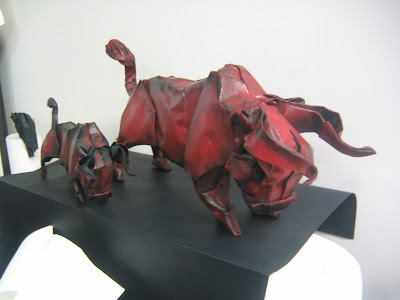
A bull by Mr. Stefan Weber from Germany. Incredible!!!


A modular “26 Rupees” by Mr. Daniel Kwan. I took this class and I always find that in these modulars it’s not so hard to fold each pieces but rather hard to put them together.
I’ve never been to Conventions overseas. Someday I’d like too.

NEBUTA NO MATSURI

                                             ねぶた 祭


Without a doubt, something that always captivated me is the amount, and varied, festivalsthat celebrate the Japanese during the year. Today we will go north of Japan's main islandHonshu called (which in ancient times was known as Hondo), to know the Nebuta festival.
.
In the prefecture of Tohoku are carried out in various cities that make up this celebration,but the Aomori-ken of the best known. Aomori is the northernmost city on the island ofHonshu, bounded on the north island of Hokkaido, and was founded in the Edo period(1603-1867). The city was rebuilt, almost in full, after being bombed by the Americans inWorld War II.

The Nebuta is held every summer during the first week of August 1 to 7. In ancient times the celebration was governed by the old Japanese calendar, so it was done on the seventh day of the seventh month.
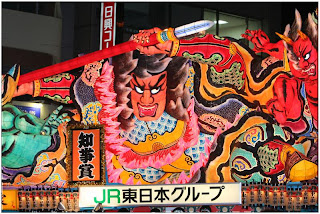

The origin of this celebration goes back to ancient times. According to legend, in 800 theShogun Sakanoue Tamuramaro not want out of their territory to the enemy that was north ofTohoku, for it came up with the construction of great warriors floating anger loadedwallpapers (Nebuta), that be elevated in the night air and seemed giants attack relentlessly.With this system, says he came to what today is known as the city (Aomori), but really justcame to the current prefecture of Iwate.
Others say that its origin goes back to the Chinese festival Tanabata, where one of hiscustom was to send various forms of wood, wrapped in Japanese paper with a light insidethat float across the river, in order to purify and send the heck out of the sea. This customwas known as Toro, and the Japanese took for Obon celebration in summer (see previous entry).

Nebuta (Nenpute in the local dialect (Hirosaki)) means sleepiness or drowsiness, because the end of summer is near and soon will come the fall. As the festival serves as a way to awaken the sleeping souls, by the advent of this new season and preparing for Obon.

In ancient times, the buildings were made ​​of bamboo, Japanese paper coated withspecially treated for painting and heat, and internal lights were candles.
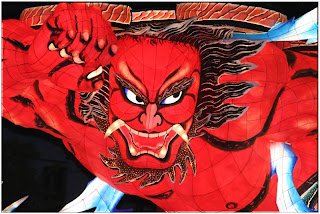
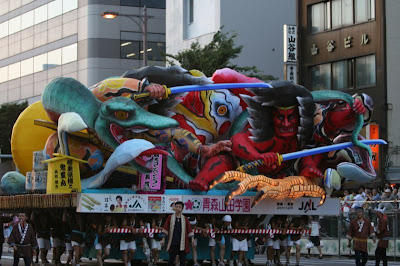
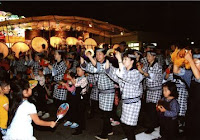
Buildings that are made today are enormous bases and wooden frames and wire floats like a 6 to 7 meters high and 12 meters wide and 12 feet deep, with an approximate weight of up to 4 tons, covered with rice paper, beautiful and artistically colored. Lights inside withabout 800 light bulbs, and during the festival are carried along the streets fastened under the shoulders of about 50 people to support their weight.


The designs of the floats ranging from samurai warriors known as Kato Kiyomasa(Toranosuke) mythical animals (dragons), demons, and kabuki characters among others.Accompanied by dancers (Haneto), the noise of the drums (Taikos) and the sweet sound ofbamboo flutes, announcing the arrival of a new coach. Before them is always a cartequipped with two barrels, to relieve the thirst of the troupe. What what's in the barrels?,What else could be!: Sake = O)
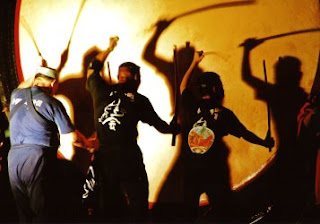

The festival usually is made up Nebuta 20 floats. The tour consists of a 2.5-mile marchstarting in the early hours of the afternoon and ending about nine o'clock at night.


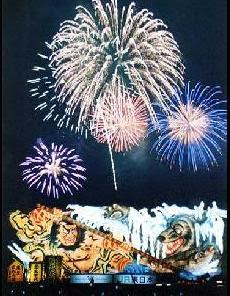
The splendor of this festival in the final days about the same, when all the floats take to the streets and the three best and most striking of these great buildings are brought into sea of ​​Aomori, and transported on small boats that zip around the port. This represents the closing ceremony of the festival, called Nebuta-nagashi, and closes with a flourish the lavish fireworks display.

In this festival the vast majority of the inhabitants of Aomori freely engage in organizing theevent and in the construction of the floats. It's a job that takes them almost a year, between the design of the figures, made ​​by real artists for decades and known as Nebuta-Shi, the selection of materials and the building itself.


OBON


The Bon-bon or O (in Japanese, some are substantive precedes the vowel "O" to disposeof respect and formality) is one of the most important traditions for Japanese. The Obonwas celebrated in antiquity under the Buddhist religion, from India, to pray for the repose ofthe souls of the ancestors, and long life to live on day 15 of the seventh lunar month. The word comes from Urabon Obon-e, derived from the Hindu word "Ullabana."

According to Bussetsu Urabon Sutra, the origin of this tradition goes back to the ceremonyby the Buddha Shakyamuni in honor of the late mother of Maudgalyayana, a disciple of the latter, during a meditation session became aware of the suffering of his recently deceasedmother . Through his compassion and Buddha's advice could help her mother's spirit rest in peace. Which means, that the dead also have to leave their families, and that the livingmust alleviate, remembering and praying to them for their welfare.

The Japanese believe that the spirits of their ancestors return home to reunite with theirfamilies during this commemoration. Obon is an important period for Japanese families,because it allows to meet and reconnect. There is a national holiday, but many Japanese take vacation that week to meet with their families.

Currently, the Obon is celebrated around the August 15 solar calendar, but the date of celebration varies in some regions of Japan. It usually starts on August 13 and end on 16.In Okinawa is still celebrated on the 15th of lunar calendar.


During those days people clean their houses and the graves of their ancestors, place flowers and pour water on them in a small ceremony called "Mairi Haka" and prepare thealtar (butsudan) to honor the spirits of their families. Many families have a small altar in their homes, but what are you preparing for that special date day 13. Place the image of Buddha, emblem or family crest, and offering several (dry tree leaves or hanging plants,candles, kamidana, apples or other fruits, bamboo, incense, miso, a bell, etc.).. If your family has a member who died last year, is usually prepared in advance (the first week ofAugust) and it has more significant and symbolic elements of the family.


After the family has visited the cemetery to greet his ancestors, offerings of food placed on the altar, such as rice balls, raw rice, lotus flowers, eggplant, zucchini. Some altars arezucchini and eggplant with sticks resembling the legs of a horse. According to belief, it is said that the ancestors came mounted in cows.

On August 13 lit paper lanterns at home and perform the mukaebon, which is that familiescome to the graves of their ancestors to pray to and ask them to come home and put thesepaper lanterns (chouchin) from the cemetery to their homes. According to tradition, light isthe element used to guide the path of the spirits for their safe return home. In other parts ofJapan the headlights are replaced by a torch of fire (pine) or small bonfires (hemp leaf).These flares, lit bonfires and lanterns are called mukaebi (fire welcome or greeting). In some cemeteries in Japan light candles in stone lamps is around, and placed in each lamp calligraphy paper (to prevent the candle) to welcome the ancestors.


On August 16 families in some regions of Japan light up the torches and lanterns again inwhat is called okuribi (fire-bye) to wish him a happy return to the world of the dead, andthank you for your visit. The paper lanterns or lamps (chouchin) are painted with the coat of arms, and transported the August 16th to the grave of the deceased to show you the way back and who knows how to recognize the emblem of the family, this action okuribon call.

During the week, commemorative activities will occur:

Bon Odori The

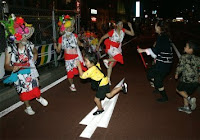
It is a traditional Japanese dance, which is used to perform on these dates and during the night, as it is at night that souls return. The type of dance varies by region. The women arewearing the summer kimono (yukata), and dance on a stage, where they play music withtaiko drums and traditional music. Music is happy to welcome the ancestors, anyone can participate in the dance, you just need a smile and look as they do to keep up.


http://www.youtube.com/watch?v=du_2AqKzJN4&feature=player_embedded#!


Toro Nagashi

It is celebrated on the night of August 15. Is to send back the spirit of the dead to the worldthrough headlights, with a light or candle inside, floating down the river before emptying intothe sea. Again, this practice varies by region of Japan, Hiroshima is customary to makesuch a wooden boat and sent to sea in the port.


http://www.youtube.com/watch?v=b8vWHPQ7DGE&feature=player_embedded


Go-zan no Okuri-bi
Go-zan-bi Okuri not

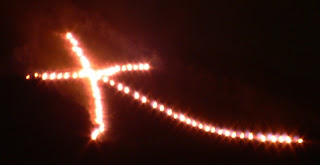
Literary Translation: Five Mountains in the fire of goodbye. When dusk falls on the 16th, five mountains around Kyoto are illuminated by bonfires, offered as a farewell to the souls of the ancestors. They make shapes with kanji (Chinese characters), especially the kanji "Ookii" or "Dai" (large), "myo" miracle "ho" doctrine, as well as the figure of a boat that gives us theidea of ​​parting and going . It is also known as the Daimonji.

The smell in the streets, temples, cemeteries and homes are filled with the fragrant incense"Senko" used for this occasion.


Ninja village.

 Apparently there are several villages or houses of ninjas ninjas as tourist attractions in Japan, and one to which we were in the city of Kouka. On the walls of the nearest station isa optical illusion paintings and floor tiles are arranged in the shape of a shuriken (ninjastar), one of the weapons of the ninja.


It is said that all the people of this village are descendants of ninjas, and one of them whoare hardworking ninja in the village, we came to pick up the station to take us to the village.He told us that many visitors come from abroad. Often, they receive coverage from the media such as television or magazines.

Within the village you can rent a ninja costume, visiting a real ninja house, try some of theabilities or skills that should have a ninja or ninja enjoy watching a show.


The village is provided with a botanical garden where you can find some medicinal plantswhich are worth the ninjas to make their potions, and has a place where you can throw a real shuriken. It has a sanctuary where they commemorate the ninjas who were killed, a small museum where you can see all the weapons they used, and a shop where you can buy some items used by the ninjas, such as swords, shuriken or ninja costumes .

Proverbs with illustrations

The proverb (from the Latin proverbium) is a type of paremia, a judgmental statement. Otherjudgmental statements are: saying, adage, maximum sentence, aphorism, phraseproverbial maxim. The study of the sayings and proverbs is framed within the paremiology.


The point of a driven nail is bended not to slip off.


To make extra sure to avoid something wrong
To think carefully about the possible results or consequences before doing something


Say one, know ten.


A word is enough to the wise.


Even if it rains or spears fall


No matter what happens, but falling rain or spears.
More than a proverb is a saying that holds a promise or undertaking, which in Spanish we say again: "I'll be there, rain or shine."


The first is Mt. Fuji, the second a hawk and the third an eggplant.


The first is Mt. Fuji, the second a hawk and the third an eggplant. These are lucky things in one's first dream in the New Year.


A nail is driven into Nuka, salted paste for pickling.


A nod's as good as a wink to a blind horse.
You can take a horse to the water, but you can't make him drink.


A horse come out from a Hyotan, a gourd


A thing said or done in jest that comes true


A body with drango's head and snake's tail


Something which disappoints by failing to deliver anything of value, despite a showy beginning
start with a bang and end with a whimper
a flash in the pan


A drop of Sparrow's tears


a very small amount


Daikon, a Japanese white radish, is cut by Masamune, one of the most excellent swords in Japanese history.


Take not a musket to kill a butterfly.
Burn not your house to scare away the mice.


A monkey sees the bottom of others and laughs it.


The pot can't call the kettle black.
You can see a mote in another's eye but cannot see a beam in your own


as different as the moon from a soft-shelled turtle


as different as chalk from cheese


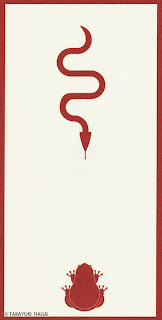
a frog transfixed by the cold gaze of a snake


Caught like a deer in the headlights


A leaving Itachi, weasel, breaks wind


a parting shot


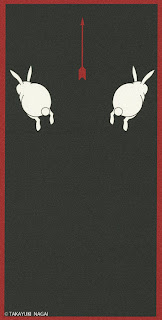
He who run after two hares will catch neither.


Between two stools you fall to the ground.


DARUMA ダルマ


Have you set a goal for this year? We Japanaese people establish a goal on New Year’s day, and I bought a daruma doll for my sons to encourage them to go for what they want.

This daruma doll, vary in color or size, but mostly red and still has white eyes. The recipient colors one eye black as he sets a goal, and encourage himself for it. If he reaches the goal, he colors the other eye. There is a weight in the bottom of the daruma, and even if he has fallen it comes up by itself, wishing that we get up as many times as we’re down. Also note the grim face that shows he is working hard!

With love and hoping that all your dreams come true!

SPRING FLOWERS


This is a flower called "jinchouge" and is pronounced in Spanish "llinchouge." Its English name is Winter Daphne. Do you have this flower in your country? If the answer is no, I would like to send your surround much sweet fragrance. In Japan we found this flower at this time of year, most of the flowers are pink, but there are white flowers. When we see these little flowers means that you have completed the cold days.


This flower is called "Housenka" (the pronanciación "jousenca"), Impatiens balsamina.


It is a seasonal plant and is in many places in summer. They come in various colors: red, pink, white, etc, and girls (well, girls many years ago, because the girls of today do not play with them), fallen petals rub on your nails to give them color.

The flower has small stems within it, which have mature seeds when they are scattered in all directions. In summer, the children stop on the way to school to find these small stems, and make them burst. ^ ^ This makes the flowers grow back the following year, without knowingthe children contribute to the pollination of this beautiful flower.